Lindsay Normand & Nyla Perez
As Massachusetts continues to face a housing affordability crisis, Ballot Question 7 proposes a statewide change to lower the amount of land required to build a single-family home. Supporters argue that this proposal would create more opportunities for affordable homeownership, while opponents are concerned that the change would take decision-making power away from the local municipalities.
Support for Ballot Question 7 is headed up by Legalize Starter Homes, which was formed in July 2025. Since then, the committee has aimed to grow support for the ballot question that would lower the minimum lot size requirement to 5,000 square feet.
This would be a statewide mandate in comparison to the more localized process that exists now. Legalize Starter Homes argued that implementing this would be a useful tool to solve the housing affordability crisis. Smaller lot sizes means smaller homes and therefore lower costs, according to the committee.
“If we do want homeownership to be within reach, you know, at any time in the future, solutions like this are truly necessary,” said Chair of Legalize Starter Homes Andrew Mikula.
The campaign suggests that passing the proposal would generate 2,200 to 5,700 new homes annually. Boston University associate professor of political science Maxwell Palmer conducted an analysis determining the number of houses that could be created under the maximum subdivision scenario. Mikula explained that the organization used data from the National Association of Home Builders to estimate how many of those lots could be developed each year, factoring in construction costs and potential sales prices. However, Mikula said the estimate is “highly uncertain” since there’s no independent study.
Mikula used Houston, Texas as an example of a major city that implemented a lower, city-wide lot size minimum. He referred to a study sponsored by the Pew Charitable Trusts that proved that the reform could lead to more available and affordable housing.
“The homes on the new lot size cost about 40% less than the homes on lots that you could build on before,” said Mikula. “So that’s a powerful precedent. That shows that, I mean, land is an enormous portion of the cost of total development, and it also has a market value. So when you reduce the amount of land, make it legal to build on smaller lots, you know, people will end up paying less for the homes that are on them.”
For voters like Nathalia Giallongo from Peabody, Massachusetts, she voted “yes” on the question. As a homeowner herself who’s currently looking to buy a bigger home, she believes the proposal will provide more affordable and available housing for people of all stages in life.
“I think it really incentivizes the development of starter homes,” said Giallongo. “It’s going to help both younger people become homeowners, but it’s also going to help with seniors to give them more options to downsize.”
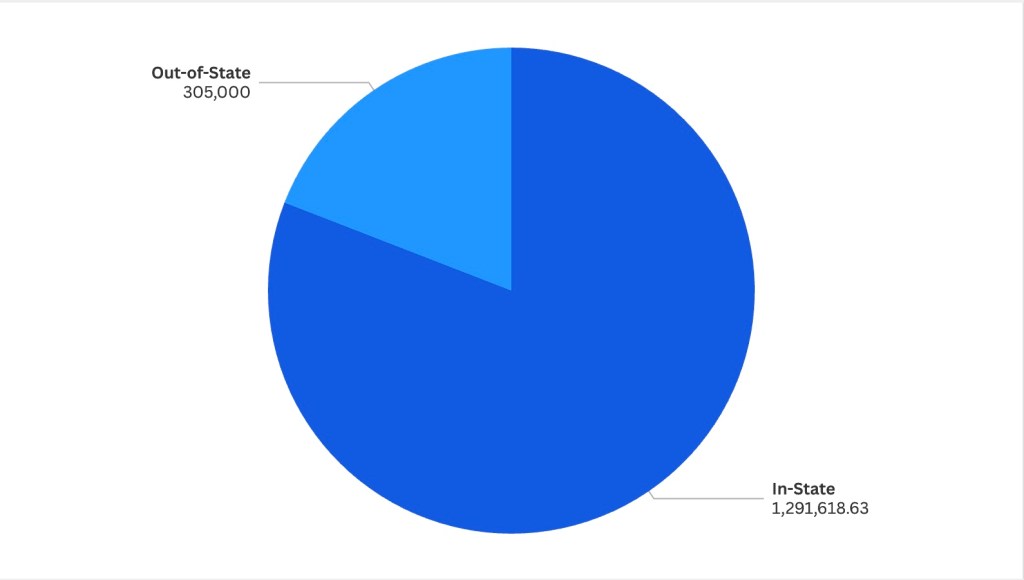
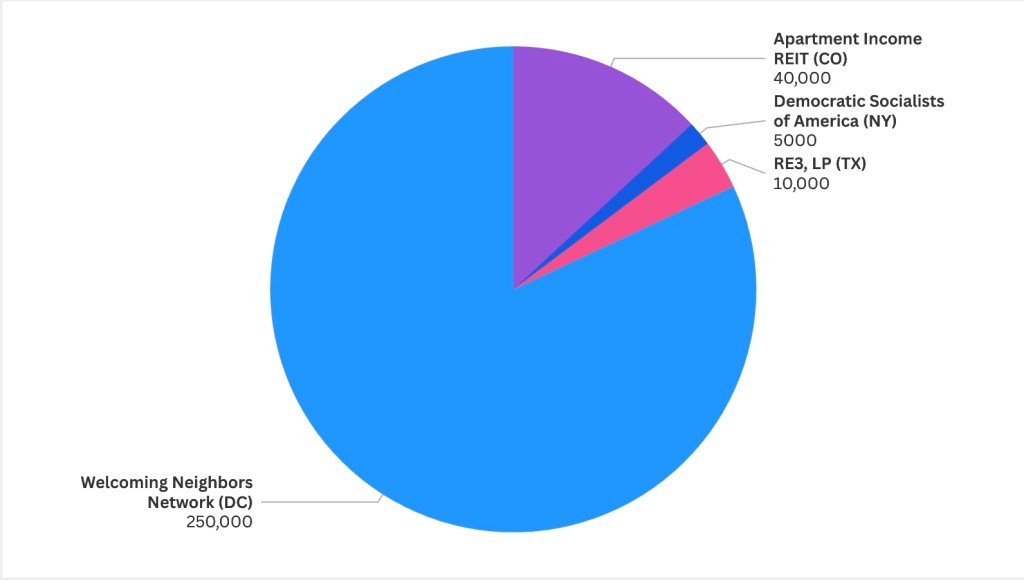
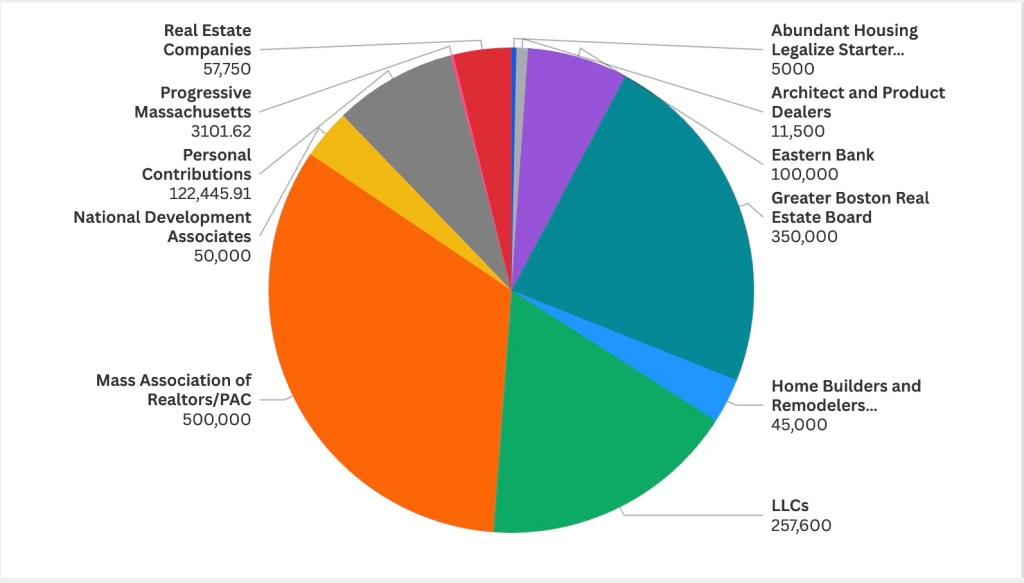
Campaign funding shows that monetary contributions to Legalize Starter Homes disproportionately favor a yes vote for Ballot Question 7. The Office of Campaign and Political Finance shows that a total of $1,596,618.63 has been raised in support of the state-wide minimum lot size while no funding has been raised in opposition at all.
The Massachusetts Municipal Association is the leading voice of opposition for Ballot Question 7, arguing that widespread implementation would take power from local governments to make their own zoning regulations. The MMA also stated that the question could do little to solve the affordability crisis because there are no specific parameters about the cost of the homes that would be built on the smaller lots.
Homeowners like Cathy from Dracut, Massachusetts believe that smaller lots don’t mean cheaper homes because construction and permitting costs remain. Drawing from conversations she’s had with contractors at her previous job, Cathy said that builders that developing neighborhoods of starter homes was not feasible due to the costs and necessary requirements.
Voters argue that the decisions about minimum lot size requirements should be left in the hands of local municipalities rather than a statewide requirement that may not account for the needs of every community.
“They’re gonna treat Dunstable, Groton, like these real open-farm communities, [like] Dracut, and they’re gonna treat us like Lowell, Springfield, Framingham,” said Cathy. “I mean, we’re different. We’re all different. How can one blanket law cover everybody?”
Mikula explained that if the law passes, communities should anticipate to see an influx of new starter homes from mid-to-late 2028. However, some residents are concerned whether their community can accommodate additional growth when their communities are already facing challenges with resources.
“It should be a town by town because some towns or cities can sustain more growth and others can’t,” said Sarah Pratt, a homeowner in Dracut, Massachusetts. “The school systems would be more overloaded than they already are without the funds to be able to get more tears or have better resources.”
“Environmentally wise, this can be a very bad decision,” said Cathy. “Do we have enough water to cover all these extra houses? Do we have enough sewer capacity…infrastructure, schools…If you can’t afford what you got now, how are you gonna afford it when you do more?”
Some voters like Anne Hjortshoj, a Boston resident, believe that the new development could strengthen the economy, community and culture. Giallongo shared a similar perspective, saying that bringing more young people into communities could benefit local economies.
“If we want young people to come to the city and contribute to the economy and create art and culture and a sense of excitement and long term growth, we’re gonna have to accommodate that in Greater Boston,” said Hjortshoj.


Leave a Reply